

Pocket Doors
Pocket doors slide into the wall instead of swinging into the room. They fit baths, pantries, laundry rooms, and any hall where a swinging door would block the path.

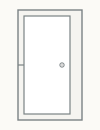
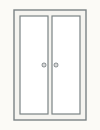
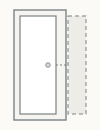
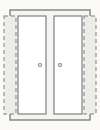
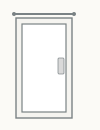
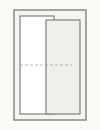

When a pocket door is the right opening
A pocket door disappears into a cavity inside the wall. That is the point: the swing of a hinged door needs a clear arc on the floor, and a barn door needs clear wall beside the opening. A pocket door needs neither, as long as the wall itself can hold a frame. Baths that open into a narrow hall, a pantry next to a fridge, a laundry door that would hit a washer, and a closet on a tight landing are the usual jobs.
The wall cannot hide plumbing, a stack of studs you are unwilling to move, or a load path you have not checked. If the wall is solid masonry or already full of pipes, do not force a pocket. A barn door on the face of the wall, or a bifold, is the fallback.
Single pocket and double pocket
A single pocket door is one slab and one cavity on one side of the opening. A double pocket uses two slabs that meet in the middle and two cavities, one in each wall. Double pocket is how you clear a wide cased opening without French doors swinging into both rooms. Both versions need a frame kit sized to the slab thickness and the wall: a 2x4 wall and a 2x6 wall do not take the same kit.
Soft-close keeps the slab from banging into the pocket or the jamb. Edge pulls or flush pulls stay inside the door thickness so the slab can pass the split jamb. A knob that sticks out will hit the frame.
What to measure before you order
Measure the finished opening width and height, the wall thickness, and how much clear wall sits beside the opening. The cavity is roughly the width of the door, so a 32-inch door needs about that much uninterrupted wall. Height follows the rest of the house, most often 80 or 96 inches. Tell us if the floor is tile, hardwood, or carpet. The bottom guide and the undercut change with the floor.
Order the door and the frame together when the opening is new. A slab alone only works if a square pocket frame is already in the wall. Locks and pulls are a separate step: privacy for a bath or bedroom, passage for a pantry or closet.