

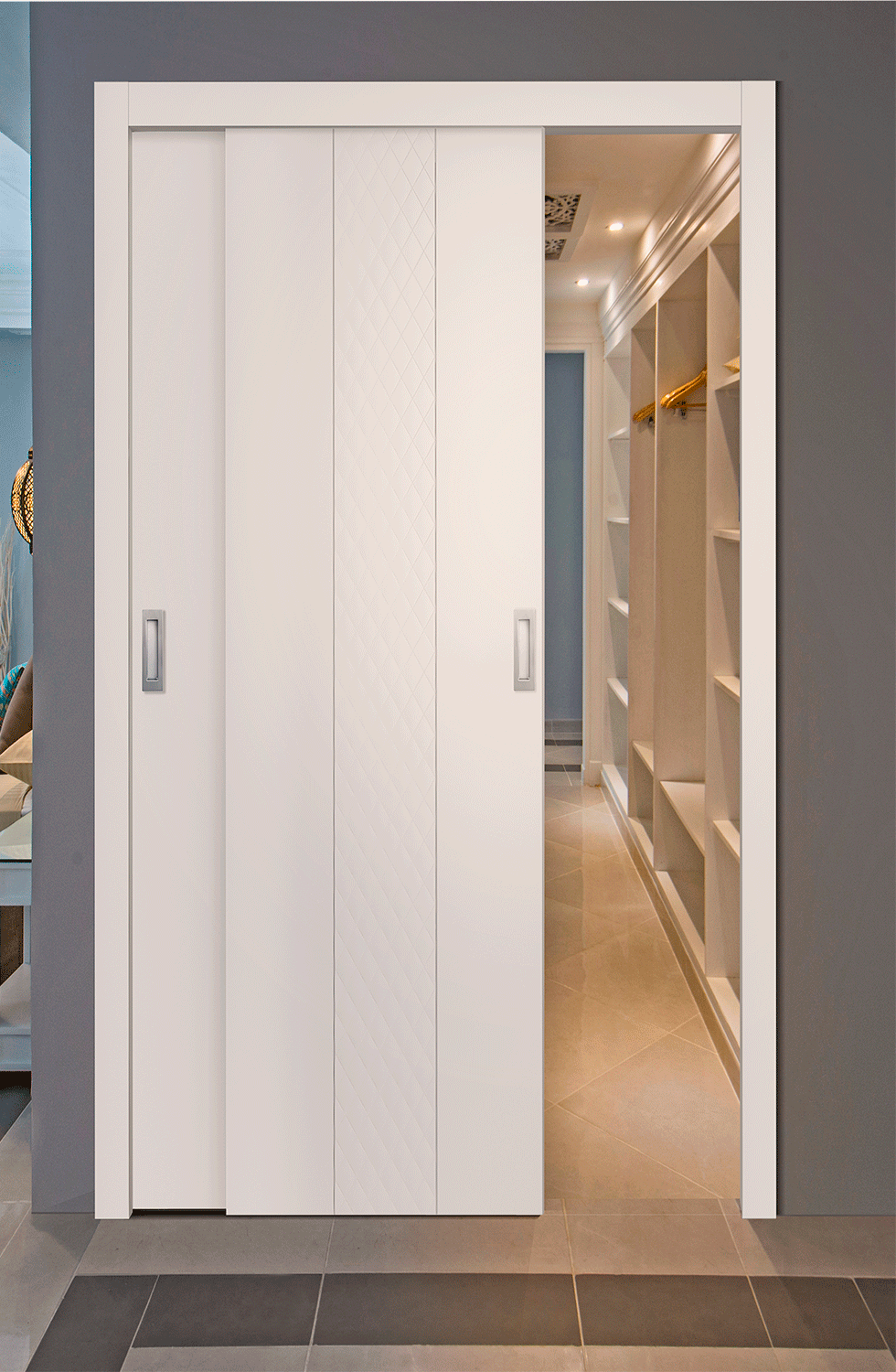
What door casing actually does
Door casing is decorative trim that wraps the perimeter of the doorway after the frame is installed. It covers the seam between the jamb and the wall surface while also helping the door feel visually complete.
In modern interiors, casing can be minimal and flat. In more classic interiors, it may be thicker, stepped, or more sculpted. The right choice depends on wall thickness, room style, and how bold you want the opening to feel.
Typical casing dimensions
Most standard interior casing ranges from 2 1/4 inches to 3 1/2 inches wide, with trim thickness usually around 5/8 to 3/4 inch. Length varies depending on whether you are measuring head casing or side casing.
If you are matching existing trim in the home, the best approach is to measure the visible face width, total thickness, and the profile depth of any stepped details rather than relying only on a nominal label.
How to measure before ordering
Measure the outside height of the opening, the visible width you want around the frame, and the wall condition around the doorway. Also check whether the baseboard intersects the side casing and whether a reveal line needs to stay consistent.
When ordering a prehung system or a custom jamb package, send both rough opening information and trim preferences so the final casing set feels proportionate to the whole opening.