

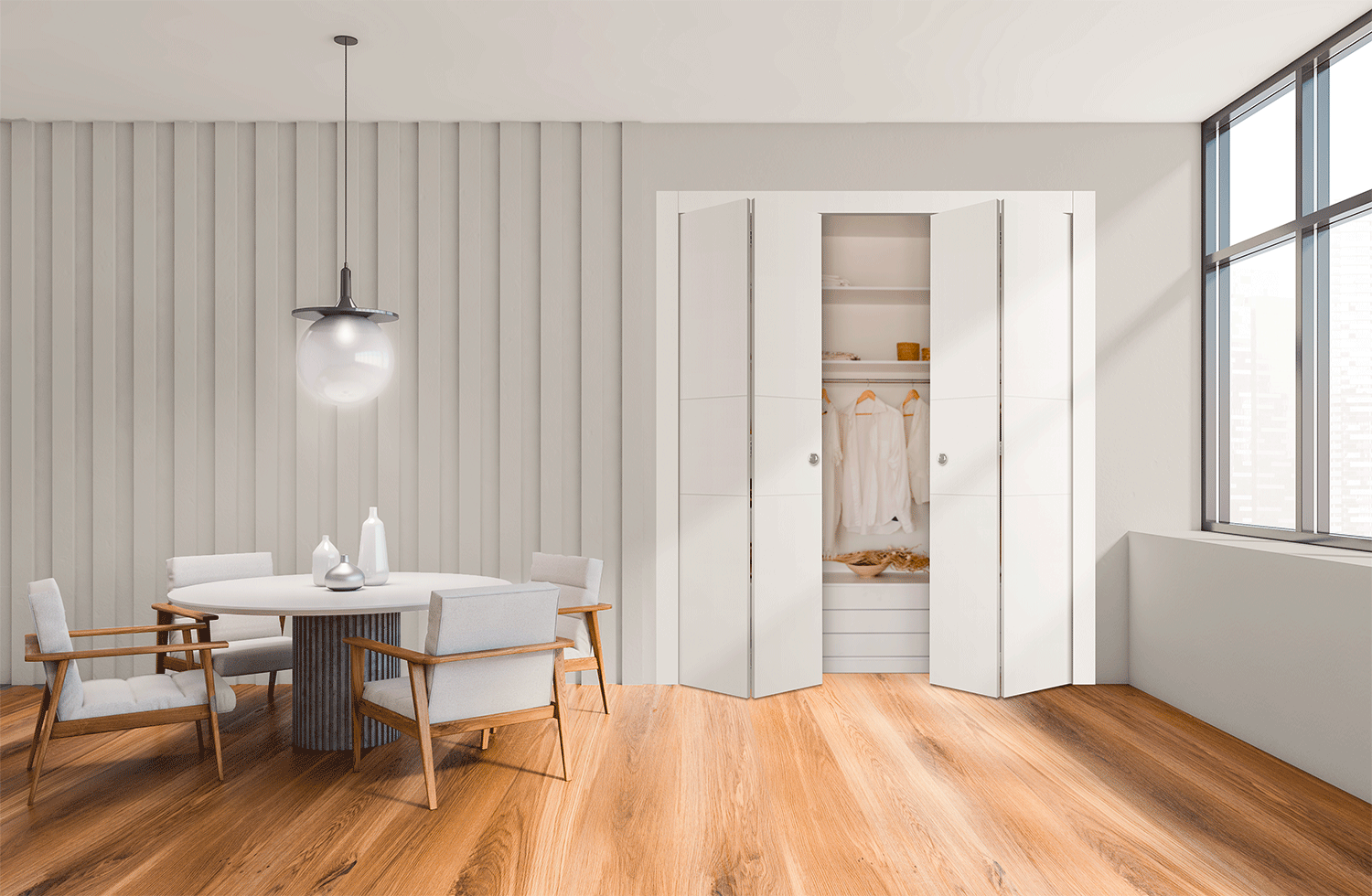
Core hardware components
A typical bi-fold system includes pivots, a top track, guide hardware, hinges between leaves, and often a bottom guide depending on the design. Each part affects how smooth, stable, and quiet the movement feels.
The most common mistakes happen when decorative goals are chosen first and hardware limits are checked later. Panel weight and opening width should be confirmed early.
Match the hardware to the load
Always compare the total panel weight against the rated load of the system. Heavy solid-core panels may require upgraded pivots or track sets that are different from lighter closet-door kits.
If you plan to use taller panels or specialty finishes, confirm the complete assembly weight rather than estimating from slab dimensions alone.
Check fit and clearances
Bi-fold systems need room for stacking, swing movement, and edge clearances. That means the rough opening, finished jamb size, and adjacent wall conditions all matter.
Before ordering, confirm whether you want minimal reveals, concealed hardware lines, or a more standard closet-door look. The desired visual result affects the hardware family you should choose.